Home
George Powe 1926-2013: a public figure, a private man
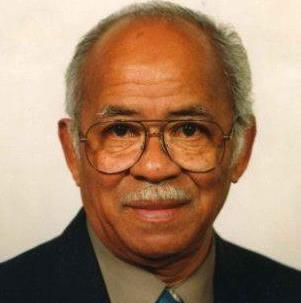
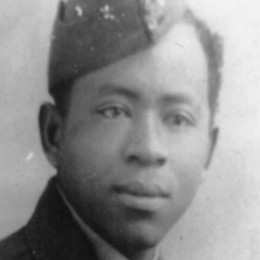
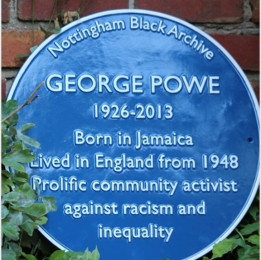
Oswald George Powe, always known as George, was born in Kingston, Jamaica, on August 11, 1926. At the age of 17 he volunteered to join the RAF, serving as a radar operator in Cornwall and Devon until 1948. He then settled in the UK, working as an electrician and subsequently as a mathematics teacher. He was a lifelong socialist and a true comrade who fought against colonialism and racism, and strove for equality and respect for the African-Caribbean community. He helped an enormous number of people to achieve their rights. For this, as well as his public service, he earned the undying respect of his fellow Jamaicans as well as members of the host community. He died on September 9, 2013, aged 87.
STOP PRESS
Was George a passenger on HMT Windrush?
George’s RAF papers show that he was repatriated to Jamaica, arriving at Kingston, Jamaica, on May 24, 1948, and was then discharged from service. Various internet sources have indicated that May 24 was also the date when HMT Windrush departed from Kingston and sailed to Tilbury Docks on its famous voyage.
It seemed unlikely that one ship could have arrived and departed on the same day, being cleaned and restocked with food and provisions for the onward journey, then taking on board at least 1000 passengers including 492 Jamaicans for their journey back to the United Kingdom. I initially concluded, a few years ago, that two separate ships were involved in these journeys.
Audrey Dewjee and Bill Hern, based in Yorkshire, have been researching the history of black people in their area for many years, and in particular the Jamaican RAF volunteers who arrived in the UK in 1948. We have shared a considerable amount of information from time to time.
Audrey contacted me recently about the above conundrum, recommending WINDRUSH: A SHIP IN TIME, a book written in 2019 by Paul Arnott and published by The History Press, as it contains relevant, accurate, and important historic information.
I can now categorically state that George sailed westward on HMT Windrush arriving at Kingston, Jamaica on his repatriation voyage.
For further details of this absolutely copper-bottomed source of information see our RAF page and go to the heading “Repatriation and Discharge”.
August 11, 2026 celebration of the 100th anniversary of his birth.
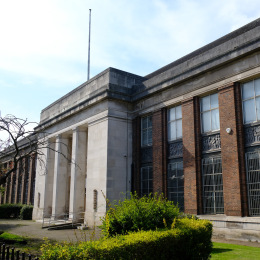
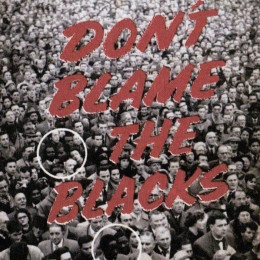
The 100th anniversary of George's birth, on August 11 2026, was commemorated by a Nottingham Black Archive event at the Central Library, Nottingham. Panya Banjoko, founder of NBA, spoke about the political and social importance of George’s 1958 pamphlet, Don't Blame the Blacks. I then spoke about:
-
his voyage on HMT Windrush,
-
how he had helped numerous people to navigate round immigration law and various other situations where racial discrimination made life difficult for them, and
-
my memories of visiting Jamaica with him.
For more information on this go to the last entry in Political and Community Action - George’s role as a voluntary adviser to the African-Caribbean community.
"Mr. Powe was an admirable person and an outstanding community leader and Counsellor. His deep sense of fair play, hard work and determination has made Nottingham a more welcoming place.... Mr. Powe was loved and respected by so many and … his life served as a real inspiration to an entire generation....” Aloun Ndombet-Assamba, Jamaican High Commissioner to the United Kingdom 2012-2016
“George was a key part of the glue that linked Afro-Caribbean and Asian communities into the mainstream of politics. [He] never lost sight of the importance of connecting big picture and small picture politics into a single vision.” Alan Simpson, community activist, former Labour Party Member of Parliament, Nottingham South 1992-2010
“It is through narratives like George’s that we know that the ‘British’ did not stand alone against the might of Hitler’s Germany. He was instrumental in advising and often advocating for many Jamaicans on immigration matters.” Panya Banjoko, performance poet, writer, and founder of Nottingham Black Archive
"To truly understand our city and our society today requires that we understand the role that George and the people who struggled alongside him played. But the stories and achievements of Black people have been under-represented in the telling of our history. We have to put that right.” Nadia Whittome, Nottingham East Member of Parliament
The documents, images, and transcripts in this archive speak mainly for themselves. Wherever possible I have included copies of original documents, but in some cases the original typeface, sometimes from a carbon copy of typed text, was difficult to read, and so appear as transcriptions. At various points it has been necessary for me to add comments, explanations, or content which resides only in my memory. These entries are shown using green italics.
Jill Westby (his widow)
Next: Jamaican Childhood